The history of vodka starts with a disputed origin: Poland and Russia both have early records, so decide first whether you want the origin story, the ingredients or the drinking customs, then follow that thread.
This page maps those threads and points to the guides that go deeper, beginning with what does vodka mean for readers who want the name itself explained.
Choosing where to start
Vodka history is easy to get lost in because dates, places and customs overlap. Three questions sort most readers quickly: are you trying to settle where vodka began, to understand what is in the bottle, or to understand how people drink it? Each leads to a different part of this page and a different set of guides.
- You want the origin story. Read the next section on Poland and Russia first. It explains why no single birthplace or date is safe to repeat as fact, and the guide to the history of vodka in russia follows the Russian thread in more depth.
- You want to know what vodka is made from. Go to the ingredients section, then to What Is Vodka Made From? The Simple Science Behind Today’s Spirits (2026 Guide) – Welovewodka for the fuller explanation.
- You want customs and etiquette. Skip to the section on drinking customs today. It links to guides on toasting, serving and the countries where vodka is part of everyday life.
- You want brands, museums or pop culture. The later sections connect to guides on the oldest vodka brands, the vodka museum and distillery visits, and film and advertising.
If you only read one section, make it the one on how to weigh early dates. It changes how you read every other claim about vodka’s past.
Where vodka came from
Vodka’s origin is disputed, and the honest answer to where it began is that Poland and Russia each have a credible early claim. A beginner’s guide to vodka from Minuman describes the origin as disputed, while a distillery-produced history from Reigncane notes that some historians argue Poland was the first to produce vodka. The Russian case rests on a different kind of record.
The Polish case
The Polish argument has two supports. The first is a manuscript: according to Minuman, a Polish manuscript from 1405 was found to contain the earliest record of vodka. The second is older and looser. The Nibble says the first identifiable Polish vodkas appeared in the 11th century and were used as medicines.
That medicinal detail matters for how you picture early vodka. The earliest spirits were not a social drink poured at a table. They sat closer to a remedy, which helps explain why the story of vodka as a drink took centuries to develop. Poland’s link to vodka also runs through later chapters, including a royal decree covered below, and through regional styles such as Polish Lemon Vodka: The Complete Guide to Cytrynówka — History, How To Make It, and Best Ways to Serve (2026) – Welovewodka and Bison Grass Vodka: Poland’s Fragrant Spirit And How To Enjoy It In 2026 – Welovewodka.
The Russian case
The Russian case rests on records of production rather than on a single manuscript. The Nibble reports that the first documented distillery was recorded in the Russian town of Khylnovsk in 1174, that commercial production was established by the 14th century, and that the first recorded Russian exports to Sweden date to 1505.
Those three points describe a spirit moving from a local craft to a traded product. They do not prove that vodka as we would recognise it began in Russia, but they do show that Russian production was organised, documented and sold abroad early in the story.
How to weigh the dates
Treat each early date as the earliest record a source cites, not as a birthday. A 1405 manuscript naming vodka and a 1174 record of a distillery measure different things: one is a mention of the drink, the other is evidence of distilling in a place. They cannot be lined up as rival winners, and a spirit used as medicine in the 11th century may look quite different from what later centuries called vodka.
For writing, conversation or a quiz, the safest summary is that vodka belongs to the Slavic lands of Eastern Europe, with Poland and Russia as the two main claimants. Anyone who states one date and one country as settled is overstating what the records show. The page on the vodka belt countries takes the wider regional view, and the guide on what is horilka covers the Ukrainian tradition that sits within the same region.
A cold climate and the earliest drinks
Climate shaped how early drinks were made in Eastern Europe, and that is the most useful bridge between vodka’s history and why it is still associated with the region. The Nibble explains that the extreme cold of Russian and Polish winters inhibited the shipment of wines and beers, and ties this to a frozen-concentration method used before distilling reached Eastern Europe.
The practical reading is straightforward. Where lighter drinks travelled badly in winter, a stronger, more stable drink had an obvious appeal, and distilling gave producers exactly that. This is a reasonable way to connect geography to taste, but it is an explanation of conditions, not proof that cold alone created vodka.
The word itself
The name points to the same Slavic roots. A reference document on Russian vodka hosted on Scribd says the name vodka comes from the Slavic word for water, and describes the drink as a distilled beverage composed primarily of water and ethanol. Water is the largest component, which is a useful fact to carry into any discussion of how vodka is made and filtered. The guide on what does vodka mean goes further into the word and its family of related names.
How distillation and filtering shaped the spirit
Distillation made vodka possible, and later filtering and equipment changes made it the clear, refined spirit sold today. The Nibble states that early vodka was distilled only once, and that later production moved to multiple distillations. The practical consequence is that the vodka of earlier centuries was a different product from a modern bottle, even though the name is the same.
Charcoal and the clear spirit
Charcoal is the next turning point. The Nibble reports that a professor in St. Petersburg discovered the method of purifying alcohol using charcoal filtration in the 18th century, and Politico likewise describes the discovery in St Petersburg that alcohol could be purified with charcoal filtration as the start of vodka’s transformation. Minuman adds the visible result: incorporating charcoal could make the vodka appear clearer in the end.
Three independent writers agree on the broad point, which gives it more weight than a single brand story. Filtering is a refinement of the spirit rather than the origin of it, and the clarity people expect from vodka is partly a product of this step.
Pot stills and column stills
The equipment changed as well. Reigncane says the invention of the column still, a more efficient distillation apparatus, was part of a commercial shift in the 18th and 19th centuries. A pot still, with its swan-neck arm, is the shape most people picture when they imagine traditional distilling, and the column still is the more efficient alternative.
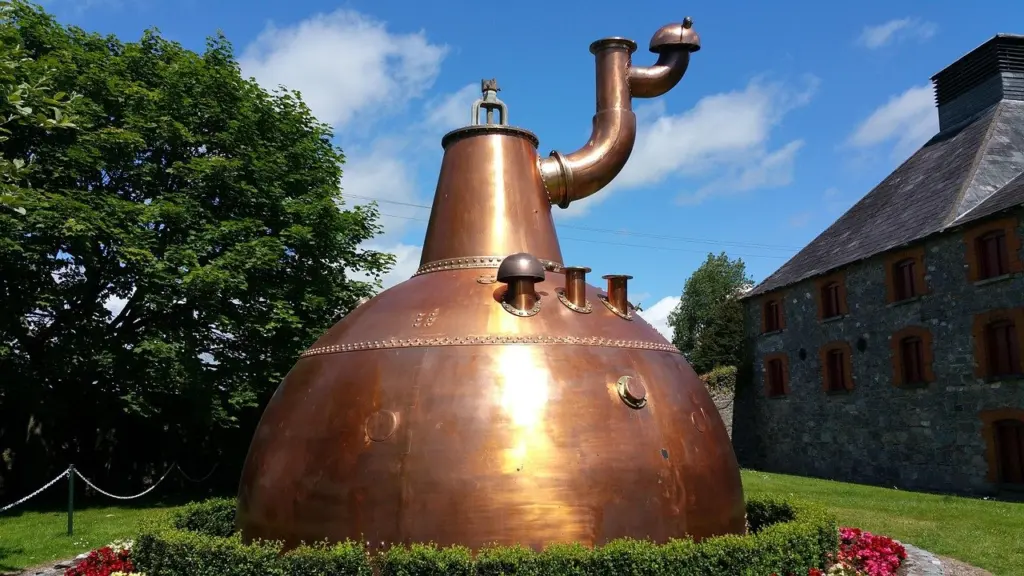
For the reader, the lesson is to separate three ideas that are often blurred together: the number of distillations, the filtering method and the type of still. Each affects the spirit independently, and each has its own place in the timeline.
What vodka is made from
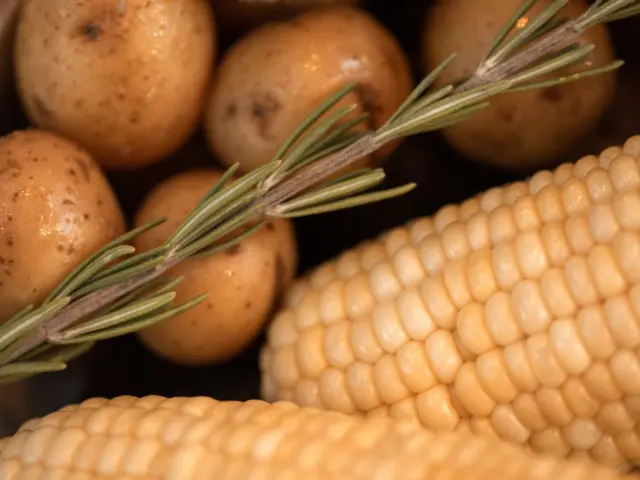
Vodka is a clear liquor made mostly of water and ethanol distilled from a fermented substance. The Nibble names grain, potatoes and sugar beet molasses as examples, and Minuman says vodka is inherently made of distilled starch, whether from grains, corn, potatoes or fruits. Reigncane makes the same point in broader terms: anything containing starch can be fermented and distilled into alcohol.
Grain, potato and the other bases
The base ingredient is not fixed by tradition alone. Reigncane notes that early vodkas were often made from fermented grains such as rye or wheat, so grain sits at the start of the story. Potatoes enter later in some places. Minuman says America began using potatoes as a base ingredient after World War II, and that vodka increased in popularity from there.
When you are choosing between bases, use these decision points:
- Choose by tradition. If you want a vodka that reflects the early grain-based style, look for rye or wheat on the label.
- Choose by curiosity. If you want to taste what the base changes, compare a grain bottle with a potato bottle. The guide Potato Vodka vs Grain Vodka: The Practical Guide To Taste, Texture, And Choice In 2026 – Welovewodka is built for exactly that comparison.
- Choose by label wording. Terms such as molasses, corn or fruit signal different raw materials. The base is a starting point, not a quality ranking.
Strength and definition
Strength is the other number worth knowing. Minuman cites an ABV of 37.5% at the lowest and 55% at the highest, and says the standard ABV for vodka in the United States is 40%. A bottle at the standard figure and one at the top of the cited range are very different drinks in the glass, so read the strength before deciding how to serve it.
Legal definitions vary by market, which is why a bottle sold in one country may not qualify as vodka in another. The guide to the legal definition of vodka sets the US and EU approaches side by side.
Nobles, decrees and monopolies
Who was allowed to make vodka changed several times, and those changes explain why the spirit is so tied to politics in Poland and Russia. The Nibble records that the King of Poland issued a decree in 1546 extending the right to make vodka to every citizen. Poland’s approach, at that point, was open production.
Russia moved in a more restrictive direction. Owning distilleries became the exclusive right of the Russian nobility in 1716, according to The Nibble. Minuman adds that Empress Catherine II permitted the country’s noblemen to make liquor from home. Later, The Nibble reports, a law was enacted in 1894 making the production and distribution of Russian vodka a state monopoly.
Politico describes the next break. After the 1917 revolution, Lenin’s Bolshevik party confiscated private vodka distilleries, forcing producers to flee the country. That detail is a reminder that vodka’s spread outside Russia was partly a story of people and recipes leaving.
Putting these steps in order shows the contrast: Poland’s decree broadened who could make vodka, while Russia’s rules narrowed it to the nobility before the state took control. The full Russian sequence is covered in the guide to the history of vodka in russia, and brand origin stories that grew out of these changes appear in the piece on the oldest vodka brands.
How vodka went worldwide
Vodka became a global spirit in the twentieth century, much later than its Eastern European origins. Politico says that between the 1930s and 1960s dozens of vodka brands were launched onto a willing world, and notes that global consumption is 4.4 billion litres a year.
The United States is a useful example of how late and how sudden the change was. The Nibble says vodka sales did not take off in the U.S. until the 1950s, helped by the Moscow Mule, made with vodka, lime juice and ginger beer. Vodka’s neutral mixing role in cocktails is part of what carried it into bars outside its home region.
Film and advertising added to that reach. The guide on the james bond vodka martini explores how a single drink order became a cultural shorthand, and it is a good next read if you came to vodka through cocktails rather than tradition.
Drinking customs today
Vodka customs are where history becomes practical. The region’s cold climate, the long tradition of home and noble production, and the later state controls all fed into a drink that is shared and marked with ritual. This page keeps to the historical thread, and the dedicated guides handle the how-to detail.

- Etiquette and toasts. For the manners around a table, read how do russians drink vodka, which compares Russian and Polish habits.
- Raising a glass. Cheers Around The World: 25 Ways To Raise A Glass In 2026 – Welovewodka collects toasts from many languages, useful if you want to make a toast sound right.
- Serving it plain. If you prefer the spirit without mixers, the guide on how to drink vodka straight compares the main ways of serving it.
- Regional habits. The vodka belt countries guide shows how habits differ across the countries where vodka is a staple.
- Visiting and tasting. For a hands-on look at history, a vodka museum or distillery tour puts equipment such as stills in front of you.
A sensible way to use these is to start with the history you have just read, then pick one custom to try. Knowing that vodka was long valued as a stable, strong drink in a cold region makes its ceremonial role easier to understand, and keeps the customs from feeling like arbitrary rules.
Vodka history timeline at a glance
This table gathers the dated milestones cited above so you can see the order of events and what each one tells you. Treat the earliest entries as the earliest records cited, not as a settled start date.
| Date | Milestone | What it tells you |
|---|---|---|
| 11th century | First identifiable Polish vodkas, used as medicines | Early spirits were remedies before they were social drinks |
| 1174 | First documented distillery, in the Russian town of Khylnovsk | Evidence of distilling in Russia, not proof of vodka as we know it |
| 1405 | Polish manuscript cited as the earliest record of vodka | The strongest written support for the Polish origin claim |
| 14th century | Commercial production established | Vodka was a traded product, not only a household craft |
| 1505 | First recorded Russian exports to Sweden | Russian vodka was already reaching foreign buyers |
| 1546 | Polish decree extends the right to make vodka to every citizen | Poland opened production widely |
| 1716 | Distillery ownership becomes the exclusive right of the Russian nobility | Russia restricted who could produce |
| 1894 | Law makes Russian vodka production and distribution a state monopoly | The state took control of the trade |
| 1950s | US vodka sales take off, helped by the Moscow Mule | Cocktails carried vodka into new markets |
The dates in this table come from The Nibble, apart from the 1405 manuscript, which is cited by Minuman.
Frequently asked questions
Where did vodka originate?
Its origin is disputed. Poland and Russia both have early claims: a Polish manuscript from 1405 is cited as the earliest record of vodka, while Russia has a documented distillery from 1174, according to The Nibble.
What is vodka made from?
Vodka is distilled from a fermented, starch-rich or sugar-rich material. Grains such as rye and wheat, corn, potatoes, fruit and sugar beet molasses all appear in the sources, and the finished spirit is mainly water and ethanol.
How strong is vodka?
One guide cites a range from 37.5% ABV at the lowest to 55% at the highest, with 40% as the standard in the United States, according to Minuman.
Why is vodka clear?
Charcoal filtration is a major reason. Politico traces the purifying method to a discovery in St Petersburg, and the clarity of the finished spirit is partly the result of that step.