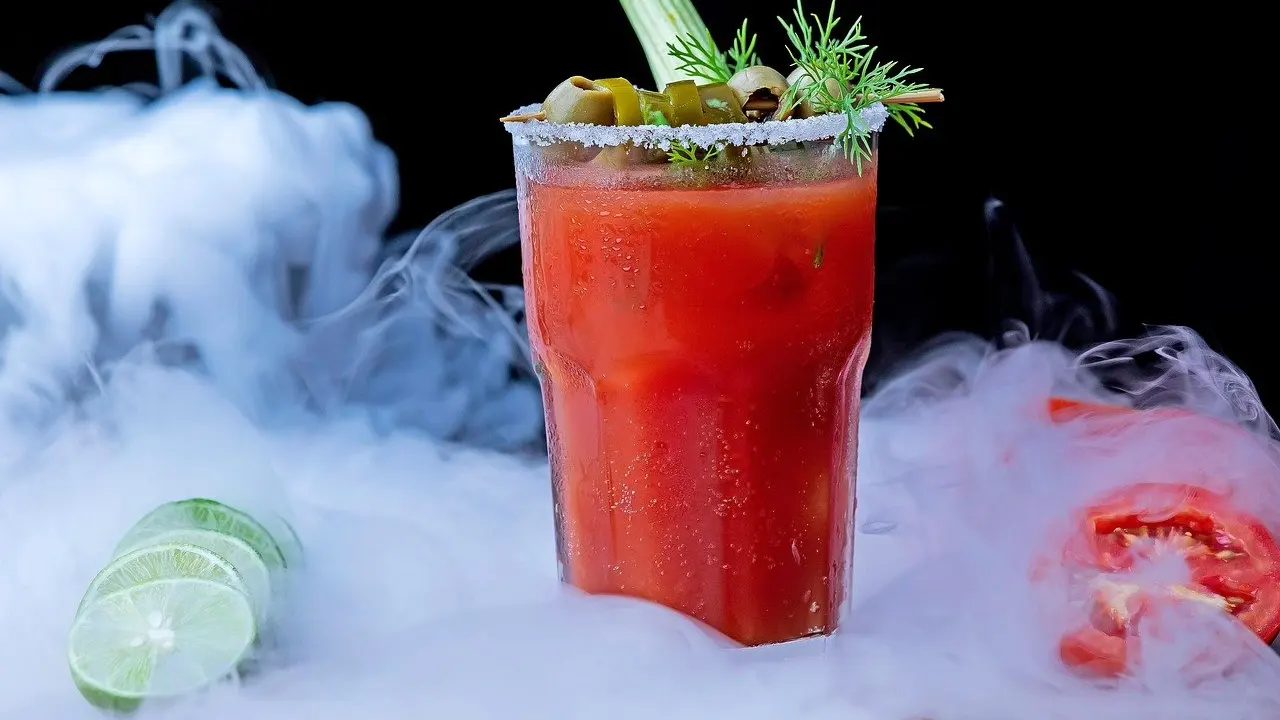
Guests arrive at brunch, and a single pitcher of pre-spiked mix leaves some of them without a real choice. A bloody mary bar solves that: pre-mix only the tomato base, keep the vodka separate, and let guests season and garnish their own glass.
Hosts building a wider menu can treat this as one station among your vodka cocktails. The sections below start with the usual mistakes, then cover the mix, the garnishes and the order of service.
Where Bloody Mary bars usually go wrong
Most problems come from treating the bar like a punch bowl. A good bar is a buffet-style assembly line. Di Lusso’s deli guide recommends one long table that shows off the ingredients, so guests move along it in order. Advanced Mixology describes the joy of a buffet-style bar as giving guests a surplus of options. The table below sets the common assumptions against what works better.
| Common assumption | What works better | Planning use |
|---|---|---|
| Pre-mix the vodka so service is faster | Keep the tomato juice mix and the spirits separate so guests add as much or as little alcohol as they like | Fill the pitcher with mix only and put the vodka bottle beside it. Everyone can use the same mix, whether or not they add a spirit. |
| Any glass will do | Wide-mouth glasses such as pint glasses, highballs or mason jars, with room for garnishes | Choose glassware by how well it holds a loaded skewer, not by how it looks empty. |
| Ice is just ice | Ice cubes frozen with garnishes or with juices such as tomato or pickle juice, which won’t water down the drink | Freeze the infused cubes before the event and use them in place of plain ice. |
| Guests will build garnishes from scratch | Make some skewers ahead of time | Prepare a tray before guests arrive so the line keeps moving. |
| Mix can sit out like a soft drink | Keep the mixture refrigerated or over ice | Keep the serving pitcher chilled or stand it in an ice-filled tub. |
These practices come from Di Lusso’s bar-building guide and Crowded Kitchen’s Bloody Mary bar guide.
Several other assumptions cause trouble:
- More heat means a better bar. Heat is a personal setting. Both horseradish and Tabasco are added to taste in the Advanced Mixology recipe, so a moderate base with hot sauce on the table lets cautious guests and heat-seekers both enjoy the drink.
- The spirit belongs in the pitcher. A bar-style setup works against that. A cup-and-cooler guide from Cup of Arms advises against mixing the vodka in, because guests can then make drinks to their liking.
- Garnishes are decoration. They are part of the flavor, since brine, herbs, pickles and cheese all change the drink. Treat them as ingredients and stock them accordingly.
Mix recipes and quantities per guest
The supported quantities are per-serving builds, not a per-guest volume rule. The practical method is to take a tested single-serving build, multiply it by the headcount and the drinks you expect each guest to take, and mix a little over. Three published builds show how the proportions are set.
- Single serving. Advanced Mixology lists 3 oz tomato juice, 2 oz vodka, 0.75 oz lemon juice, 2 dashes Worcestershire sauce and 0.5 tsp horseradish, with horseradish and Tabasco added to taste. It is written for 1 serving with a 5 minute prep time. This is the easiest build to scale because it is written for a single glass.
- Pitcher base. Well Seasoned Studio lists 4 servings from 8 oz vodka, 1 oz fresh lemon juice, 1 oz Dijon mustard, 1 oz horseradish, 10 dashes Worcestershire, 10 dashes Tabasco and 12 oz tomato juice, all stirred together in a large pitcher. For a bar, treat it as a seasoning template and set the vodka out separately, as the table above suggests.
- Large batch. Crowded Kitchen offers a vegan batch of 24 oz tomato juice, 6 oz vodka, 2 oz pickle juice and 3 tsp horseradish. It adds 1/2 to 3/4 tsp Tabasco per batch, with more available for serving. It suits hosts who want a bigger base in one container.
In all three builds, tomato juice is the largest component and vodka the smaller one. The vodka also sits beside the juice rather than replacing it, which is the proportion to keep when guests pour their own. Avoid following the pitcher yield literally if you pull the vodka out, because the volume then changes. A single-serving build is the safer starting point for scaling.
Tomato base, heat and flavor boosters
Tomato juice is the base, and the boosters are what make a bar feel generous. Keep the base itself fairly plain, so guests can steer it toward savory, spicy or tangy.
- Hot sauce. Tabasco is the sauce that recurs across the recipes. Keep the bottle on the table, since Crowded Kitchen’s batch calls for a small amount and then more for serving.
- Horseradish. It adds sharp heat that differs from chili heat. Offer a jar or a small bowl with a spoon so guests can add to their own drink.
- Savory and sweet add-ons. According to Di Lusso, Worcestershire sauce and olive juice are savory favorites, while barbecue sauce and ground ginger work for a sweeter direction. The olive juice comes from the same jar you will use for garnishes.
- Pickle juice. Crowded Kitchen builds it into the batch, so a small bottle of brine on the table is an easy extra.
Garnishes and rims
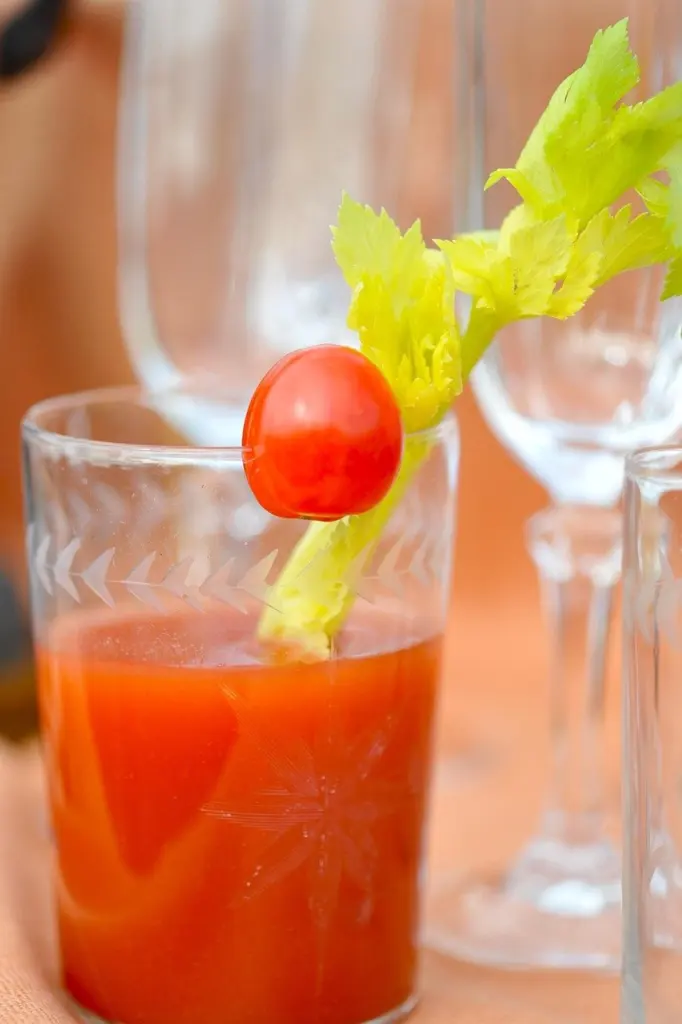
Garnishes are the main attraction, so offer a mix of crunchy, briny, rich and fresh items. Celery is the anchor, and the rest of the table can build around it.
What to put on the garnish table
Published bars share a core set and then branch out:
- Core items. Crowded Kitchen lists olives of any kind, celery and/or cucumber, fresh dill, basil or parsley, pickles and cheese cubes.
- Heartier extras. Well Seasoned lists whole celery stalks, bacon, cornichons, shrimp, fresh dill, pimento or blue cheese olives, lemon wedges, cheese and pickles. Bacon and shrimp turn the drink into a snack and suit a brunch.
- A restrained set. Advanced Mixology garnishes with a celery stalk, a skewered olive, red bell pepper, gherkin and hot pepper, a good model if you want fewer bowls.
Offer skewers, since Crowded Kitchen suggests assembling toppings on skewers and sticking them in the drink. Well Seasoned adds that skewers or toothpicks let guests assemble their own. For more ideas and styling, see Cocktail Garnish Ideas: 25 Simple, Stylish Picks To Elevate Any Drink in 2026 – Welovewodka.
Rim mixes
A rim station takes little space and changes the first sip. Put citrus juice in a shallow dish for adhesion, as Di Lusso suggests, with lemon or lime juice, then offer seasoning in a second dish.
- Old Bay rim. Crowded Kitchen mixes 2 tbsp kosher salt with 2 tsp Old Bay seasoning and uses agave to make it stick.
- Celery salt. Well Seasoned combines 1/4 cup kosher salt, 1 Tbsp finely chopped celery leaves and the juice of 1 medium lemon.
- Other options. Di Lusso calls celery salt the classic, and lists smoked paprika, cayenne, chili powder, garlic salt and wasabi powder as alternatives.
Setting up the bar step by step
Order the table so that guests meet each element in the sequence in which they use it. The steps below follow the one-table, assembly-line approach in Di Lusso’s guide.
- Clear one long table. Lay it out buffet-style. Put glasses at the start and garnishes at the end, so guests finish with the decoration.
- Choose wide-mouth glasses. Pint glasses, highballs and mason jars all leave room for skewers and stalks.
- Prepare the ice. Freeze infused cubes with tomato or pickle juice ahead of time, and keep plain ice for guests who prefer it.
- Set out the mix, chilled. Keep the mixture refrigerated or over ice, as Crowded Kitchen advises, and pair it with a long spoon.
- Place the spirits next to the mix. Keeping them separate lets guests control the alcohol. It also means a guest who skips the vodka uses the same mix.
- Add seasonings and rims. Place the hot sauce, horseradish and rim dishes before the garnishes, so guests season before they decorate.
- Finish with skewers and garnishes. Prepare some skewers in advance, and keep toothpicks nearby for guests who want to build their own.
For a weddings-and-parties crowd, the same layout scales by adding a second mix pitcher and a second set of garnish bowls rather than by changing the order. If the brunch menu also includes a lighter fruit option, Watermelon Vodka Cocktails: Refreshing Recipes, Techniques, And Serving Tips For Summer 2026 – Welovewodka offers a different style of drink to put beside the bar.
Frequently asked questions
| Question | Answer |
|---|---|
| Is Worcestershire sauce suitable for vegetarian guests? | Not always. Crowded Kitchen notes that classic Worcestershire almost always contains anchovies, and its vegan version uses Old Bay instead. Label the bottle if you set it out. |
| Can Clamato replace tomato juice? | Yes, as an alternative base. Well Seasoned describes Clamato as a mix of tomato sauce and clam juice, so it adds a seafood note and is worth labeling. |
| How long should a made-to-order drink be shaken? | Crowded Kitchen shakes with ice for 15 seconds and then pours over fresh ice. A self-serve pitcher only needs stirring. |
| What cup size suits an outdoor or tailgate bar? | The author at Cup of Arms prefers a 16 oz soft plastic cup for tailgate bars. Indoors, wide-mouth glass works well. |