What proof is vodka matters to buyers, bartenders, and health officials. The phrase “what proof is vodka” asks how strong a spirit is. This introduction gives a brief, clear answer. Proof measures alcohol strength. The term links to history and to modern labels. The reader will learn how to read proof, how it converts to ABV, and how to use that information safely. Throughout this article we repeatedly address the simple consumer question: what proof is vodka — and why that number matters for taste, mixing, safety, labeling, and cross‑border comparison.
Key Takeaways
- Proof measures vodka’s alcohol strength and is defined as twice the alcohol by volume (ABV) in the U.S., so 40% ABV equals 80 proof.
- Knowing what proof is vodka helps consumers compare brands, understand taste differences, and make informed drinking choices.
- Higher proof vodka has stronger ethanol presence and a more intense flavor, while lower proof vodka is smoother and highlights subtle notes.
- Vodka labels worldwide mostly use ABV for consistency, but U.S. bottles also display proof to assist buyers and bartenders.
- Checking vodka’s proof is important for safety, as higher proof vodka increases blood alcohol faster and affects standard serving sizes.
- Proof impacts regulations and taxes, so accurate labeling protects consumers and ensures compliance with laws.
What Is “Proof”? The Basic Definition And History
What proof is vodka began as a simple test. Sailors mixed spirit with gunpowder and tried to light it. If the mixture burned, they called it “proved.” Merchants then used the term to grade alcohol. Modern proof became a numeric label for strength. Distillers later standardized proof with scientific measurement. The United States defined proof as twice the alcohol by volume (ABV). The United Kingdom once used a different system tied to specific gravities and taxation before adopting ABV in practice. Over time, nations moved to ABV for clarity and international trade. The folk origins of the word explain why “proof” conveys a practical, pass/fail sense, while modern use is a precise conversion: when consumers ask what proof is vodka, they are usually looking for that numeric indicator of ethanol concentration rather than the old lighting test.
How Proof Relates To ABV (Alcohol By Volume)
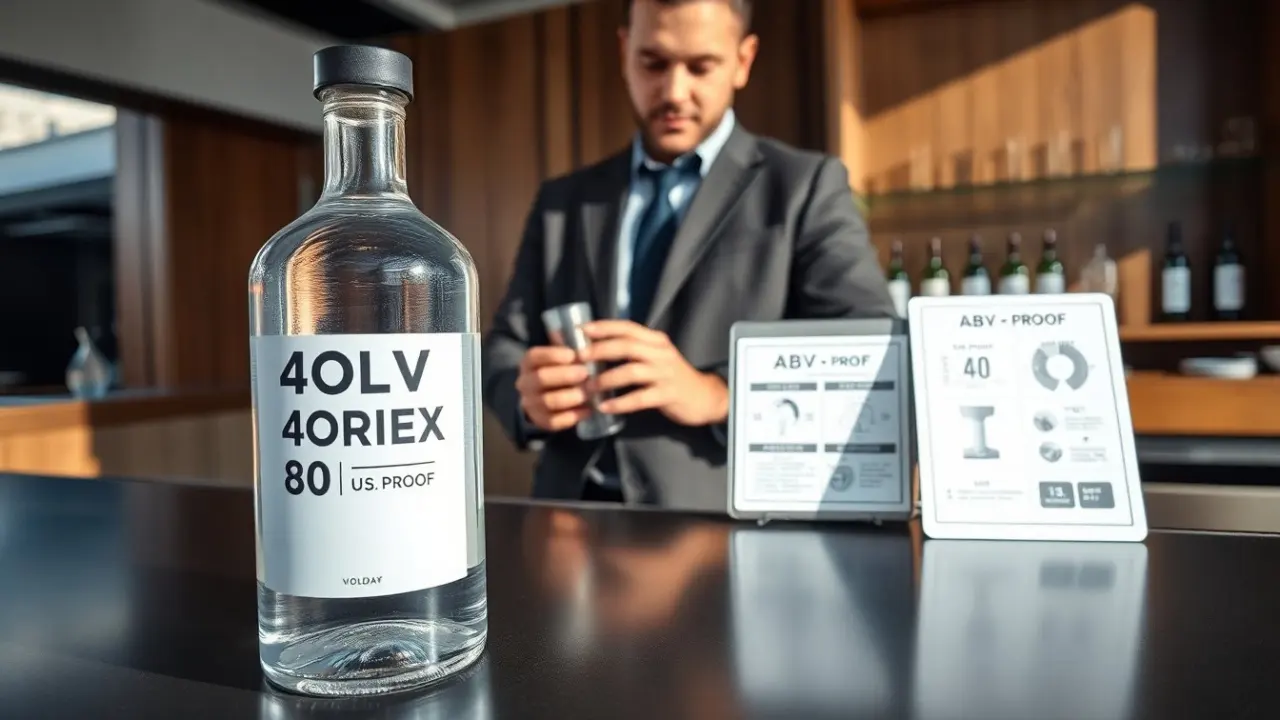
People ask what proof is vodka because proof gives a quick sense of alcohol content. In the U.S., proof equals two times ABV. If vodka lists 40% ABV, the label shows 80 proof. The ABV figure tells how much of the liquid is ethanol. Labels use ABV for legal clarity and for health guidance. Bartenders rely on ABV to balance cocktails: a spirit with higher ABV will contribute more alcohol and a different flavor profile to the same cocktail recipe than a lower‑ABV spirit. Regulators use ABV for taxes and safety limits. When someone wonders what proof is vodka, they usually want the ABV conversion. This section shows how to change one number into the other and how that affects serving calculations: multiply ABV by 2 for U.S. proof; to get ABV from proof, divide the proof number by 2. Those simple arithmetic steps are the core answer to what proof is vodka in everyday terms.
Conversion Examples: Common Vodka Proofs And Their ABV
40% ABV equals 80 proof. 37.5% ABV equals 75 proof, a common standard in some regions. 50% ABV equals 100 proof, often used for higher‑strength vodkas and flavored expressions intended for cocktails. 60% ABV equals 120 proof for barrel‑proof or overproof variants. To convert, multiply ABV by 2 for U.S. proof. To get ABV from proof, divide the proof number by 2. Consumers who ask what proof is vodka can use these examples to compare bottles and estimate alcohol intake: for instance, a mixed drink made with a higher‑proof vodka will contain more pure alcohol per ounce than the same drink made with a lower‑proof spirit. Bartenders use the same math to adjust cocktail strength and flavor and may alter proportions or add dilution (ice, water, or mixers) to reach the desired balance.
Why Proof Matters: Flavor, Regulation, And Tax Implications
Proof affects taste and mouthfeel. Higher proof vodka carries more heat and a stronger ethanol presence, which can mask delicate aromas or emphasize harsher notes; it also can carry more dissolved oils and congeners from the distillation and filtration process. Lower proof vodka feels smoother and highlights subtle neutral flavors or the specific botanicals in flavored vodkas. Regulators track proof and ABV for labeling accuracy and consumer protection: correct statements help consumers make choices and avoid misleading claims. Tax authorities often base duties or classification thresholds on alcohol content, so higher‑proof products can trigger different tax bands or import rules. Producers choose proof to meet market, sensory, and tax goals. When a buyer asks what proof is vodka, they should consider price, flavor, and legal limits. Restaurants and retailers must display accurate proof and ABV to follow law and avoid fines; accurate labeling also assists health communicators and emergency responders when determining alcohol exposure.
How Different Countries Label Spirit Strength Today
Countries use ABV as the main standard today. The European Union requires ABV on labels and commonly sees vodkas sold at 37.5% or 40% ABV. The United States displays both ABV and U.S. proof on many bottles. Canada, Australia, and most other jurisdictions use ABV on labels as the standardized measure. Some countries formerly used local proof marks or alternate definitions but have largely phased them out for international trade and consumer clarity. Export labels may show both local terms and ABV to help buyers in different markets. When consumers ask what proof is vodka across borders, they should look for the ABV number — it provides a consistent, comparable measure of strength no matter the country of origin.
Safety, Serving Sizes, And Practical Tips For Drinking And Mixing
People should check what proof is vodka before they drink. Higher proof vodka raises blood alcohol faster, shortens the time to intoxication, and changes how a drink feels and tastes. The standard drink concept exists to help compare servings: for example, a shot of higher‑proof vodka contains more pure alcohol than a shot of lower‑proof vodka, so pouring the same volume will increase alcohol intake. Drinkers should pace intake, measure portions when possible, eat before drinking, and alternate alcoholic beverages with nonalcoholic ones. When mixing, bartenders dilute strong vodka to balance flavor and alcohol delivery; ice, syrups, and mixers all change perceived strength. Home users can measure shots, count standard drinks, and prefer measured recipes to avoid accidentally serving stronger cocktails. Store bottles upright, read ABV and proof for safe use, and remember that flavored or infused vodkas may have additional sugars or compounds that change how alcohol behaves in a cocktail. If you are unsure about how a particular proof will affect you, start with smaller servings and allow time to assess effects before consuming more.