home bar setup starts with clear goals. The guide shows how to pick a layout, set a budget, and choose a style. It lists core spirits, mixers, and garnishes. It explains tools, glassware, storage, and lighting. It gives simple cocktail recipes and a service workflow. The guide helps readers build a useful home bar setup that fits their space and entertaining needs. Read through each section to match recommendations to your available space and how you like to host: whether you want a compact, weekend-only cart or a more permanent, built-in entertaining center. Small choices made early—like prioritizing counter space, deciding between open shelving and closed storage, and planning for electricity and refrigeration—will simplify every later step.
Key Takeaways
- Start your home bar setup by choosing a layout, setting a budget, and picking a style that complements your space.
- Stock essential spirits like vodka, gin, rum, tequila, and bourbon along with basic mixers and garnishes to make a wide range of cocktails.
- Equip your home bar with reliable tools such as shakers, jiggers, strainers, and appropriate glassware matched to drink types for professional results.
- Plan storage and lighting thoughtfully to keep your home bar tidy, functional, and visually appealing while ensuring safety.
- Learn and prepare a handful of simple cocktails and create a smooth service workflow to efficiently entertain guests.
Decide On Layout, Budget, And Style
Decide on layout, budget, and style early. He measures the available space and chooses a zone for the home bar setup. She calculates a realistic budget for cabinets, counter space, and a small fridge. They pick a style that matches the home. Options include a compact cart, a built-in bar, or a countertop station. He prioritizes traffic flow and access to plugs. She sets a spending cap and lists must-have items first. They select finishes and colors that tie the bar to the room. This plan keeps the home bar setup focused and affordable.
When planning the layout, consider how you will use the bar: cocktail-focused service requires more prep space and refrigeration, while a wine- or beer-first setup prioritizes bottle storage and glassware. Sketch a simple floor plan that shows where guests will stand or sit, where the host will work, and how supplies will be stored. Factor in ventilation and spill protection for countertops and floors, and plan for easy cleaning. If you are on a tight budget, prioritize one durable surface and a few multipurpose tools rather than many specialty items.
Must-Have Spirits, Mixers, And Garnishes
Stock core spirits that cover many cocktails. The home bar setup should include vodka, gin, light rum, dark rum, tequila, bourbon, and a blended whiskey. Add a bottle of dry vermouth and sweet vermouth. Put up a basic liqueur like triple sec or Cointreau. Keep mixers simple: tonic, soda, cola, ginger beer, and club soda. Add citrus juices and simple syrup. Store garnishes such as lemons, limes, olives, and cherries. Keep bitters and a few syrups on hand. This selection lets them make most classic drinks without cluttering the bar.
Think about shelf life and rotation: spirits last a long time while mixers and fresh garnishes do not. Keep a small stash of long-lasting staples and replenish fresh fruit and juices before gatherings. For variety without buying many bottles, choose one versatile liqueur and one flavored syrup that can be used across cocktails. Label backup bottles and keep an inventory list so you know when to restock before an event. If you prefer low- or no-alcohol options, include quality non-alcoholic bitters, tonic, and sparkling mixers.
Essential Tools And Glassware
Equip the home bar setup with reliable tools and clear glassware choices. He buys a shaker, jigger, strainer, bar spoon, muddler, and citrus press. She adds a small ice bucket and tongs. They choose a sturdy cutting board and storage trays. They avoid single-use gadgets. The bar should offer glassware that fits common drinks. He keeps a selection for high use and stores specialty items out of the way. She labels shelves to simplify finding items during service. This tool set speeds prep and improves the drink quality.
Focus on quality over quantity: a well-made shaker and a good strainer will outperform a drawerful of novelty tools. Choose glassware that can be mixed and matched—coupe and rocks glasses cover many cocktails, while a pair of highball glasses handle longer drinks. Keep extras of the most-used styles on hand to avoid constant washing during a party. Include a sturdy jigger for consistent pours and at least one reliable corkscrew and bottle opener mounted nearby. Regularly sharpen and sanitize cutting tools and replace any cracked or chipped glassware for safety and presentation.
Bar Tools Every Home Bartender Needs
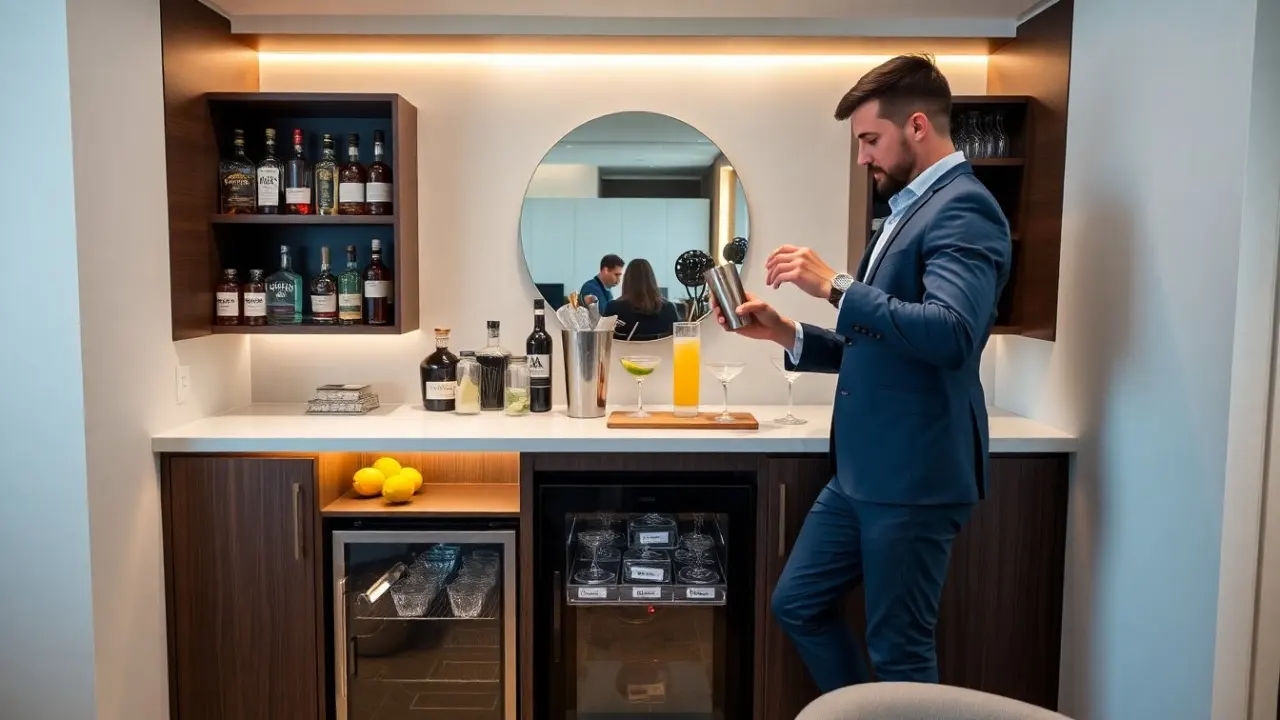
He uses a Boston shaker for flexibility and a cobbler shaker for ease. She measures drinks with a jigger to keep recipes consistent. They strain cocktails through a fine strainer for clarity. He stirs spirit-forward drinks with a bar spoon to control dilution. She muddles herbs and fruit gently with a wooden muddler. They keep a channel knife for citrus twists. He stores spare bottle openers and a trusted corkscrew. These tools support speed and repeatable results for the home bar setup.
In addition to the basics, consider a few upgrades that make a difference: a reliable ice tray or clear-ice mold, a small electric or manual citrus zester for elegant garnishes, and a durable service tray for carrying multiple drinks. Keep a foldable prep mat to protect surfaces and make cleanup faster. Store tools near the prep area in trays or magnetic strips, so they are easy to grab during service. Regular maintenance—tightening loose parts, oiling wooden handles, and washing components promptly—extends tool life.
Which Glass For Which Drink
Match glassware to drink type to improve presentation and taste. Use a coupe or martini glass for stirred or shaken spirit-forward cocktails. Serve highball drinks in a Collins or highball glass with plenty of ice. Use an old-fashioned glass for neat spirits or short cocktails. Offer a rocks glass for simple mixed drinks. Use a wine glass for wine and a flute for sparkling wine. Use a stemless glass for casual service. He rotates glassware by frequency to save space. Proper glasses finish the home bar setup visually and functionally.
Organize glassware by type and frequency of use. Keep everyday glasses within easy reach and store delicate or seldom-used stemware higher up or in closed cabinets to protect them from dust and breakage. Consider stacking options for tumblers and stemless glasses to save space. If you serve a variety of beverages, label or partition shelving so guests and helpers can quickly find the right glass. Clean glassware with minimal detergent to maintain clarity and avoid lingering odors.
Storage, Lighting, And Display Tips
Plan storage and lighting to make the home bar setup inviting and practical. He places frequently used bottles within arm reach. She uses closed cabinets for backup stock and open shelves for display. They secure heavy bottles low to avoid accidents. He integrates a small fridge under the counter for mixers and garnishes. She installs under-shelf lighting or LED strips to brighten the workspace. They add a focal display for favorite bottles and a small mirror to enlarge the view. Good storage and lighting keep the bar tidy and user-friendly.
Use storage solutions that balance accessibility and aesthetics: tiered risers on open shelves make labels readable, while drawer inserts keep tools organized and prevent rattling. Choose lighting that provides both task illumination for prepping drinks and softer ambient light to set a mood. Temperature control matters—store vermouth and opened liqueurs in a cool place and keep fresh citrus chilled. For safety, secure electrical cords and follow local guidelines for appliance placement; keep a small fire extinguisher nearby if you have appliances that generate heat.
Simple Cocktails And A Smooth Service Workflow For Entertaining
Teach a few reliable recipes to streamline service at a home bar setup. He masters the Old Fashioned, Gin and Tonic, Margarita, Daiquiri, and Vodka Soda. She pre-batches a punch or two for larger gatherings. They prepare garnishes and ice ahead of time. He sets out a small station for pouring and waste. She assigns one person to refill glassware and clear used cups. They keep napkins and coasters visible. This workflow reduces wait times and keeps guests happy during parties at the home bar setup.
To further smooth service, create a short printed menu or chalkboard with two or three signature drinks so guests can order quickly and you can prep common ingredients in batches. Keep a waste bowl and cloth nearby to handle peels and pulp, and designate tray or counter space for served drinks to avoid congestion. Practice timing for common sequences—garnish prep while shaking, glass chilling while measuring—so single-person service feels manageable. After the event, follow a checklist for cleaning, restocking, and storing perishables so your home bar setup is ready for the next gathering.